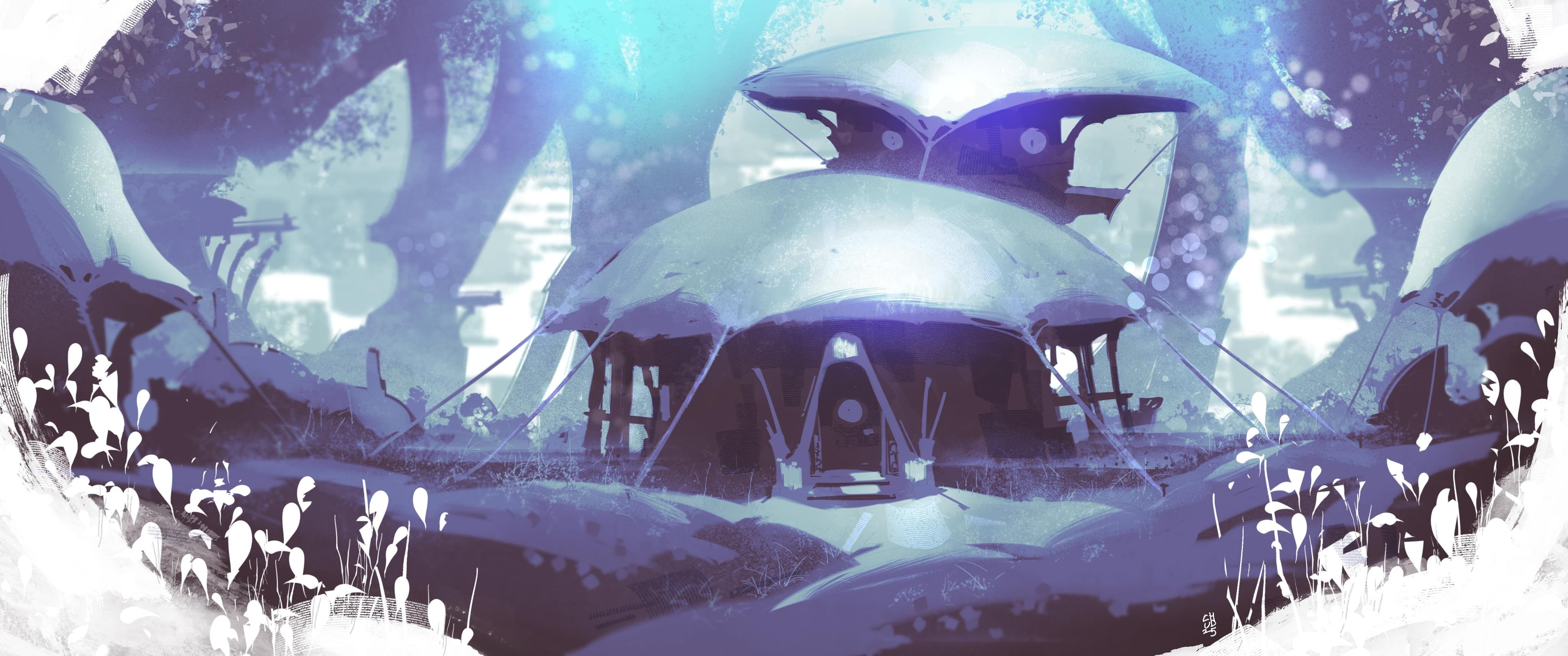
Kindrea Campaign Frame
This is the frame I use for most of my Daggerheartening. I really wanted to make my own fantasy setting and this is it!
Kindrea
A world whose dreams manifest in waking reality.
Designed by Eric Wendt/Pystoria.
Complexity Rating: ⬤ ⬤
The Pitch
Kindrea was given form and filled with mortals its gods sought to guide, but far too soon did the deities prove themselves just as capable of destruction. Their war resulted in the plane of dreams—a realm whose tears bound itself to mortal souls. Blessed by the ability to dream, yet cursed with minds whose creations can invade at any time, none can escape their own reflection.
This is a campaign setting that expects PCs and GMs alike to focus on the world's mysteries and their own character’s minds. There are several nations, gods, devils, and planes of existence, all of which possess eccentric and largely unknown locations to tempt story-focused and dungeon-crawling parties alike.
Tone & Feel
Abundant, Dreamlike, Hopeful, Introspective, Malleable
Themes
Ambivalence, Discovery, Reflection, Trust, Unity
Touchstones
The myth of Pandora, the Silent Hill series by Konami, Megami Ibunroku Persona by Atlus.
Overview
It is Ungio, Primaverun 8, 252 AE. Mortal life was created eons ago along the coasts of Suivaun by the gods Revitoure and Ideles, who emerged from nothingness soon after Morexos and before the remaining gods were given form. After seeing how devoutly the other gods were worshipped over them, Morexos feared their death would follow. In retaliation, Morexos created countless monstrosities, using them to attack the other gods and restrict the freedom of mortals. This led Ideles to quickly declare the first war: the War of Gods.
During this conflict, Morexos convinced Eeo to join their ranks and later created a dark reflection of each of the six deities who refused to join them. This formed most of the major devils who still exist today, but just as two of the gods betrayed their followers by fighting only for self-preservation, two of these devils betrayed Morexos by fighting for the mortals who were left behind. These events serve to remind mortals that the distinction between gods and devils is entirely subjective.
For reasons unknown to all but the major deities, Morexos was ultimately killed by Eeo. The Contract of Queteus was signed by each deity shortly thereafter, allowing Kindrea's mortals to live without fear of similar interventions in the future.
Those of playable ancestries are often referred to as hope-bearers by the setting's gods and devils. This is because, just after the War of Gods ended, the dream plane of Oneiron emerged. Its tears bound themselves to certain souls, granting them hope—not desire, but the ability to form dreams within Oneiron and defy fate anywhere.
Since the deities have never revealed it, there are three major theories as to how Oneiron came to exist. The truth, and other information for GM eyes only, can be read in their own section.
Unintended Consequence Theory: The unintended consequence of the spell Eeo cast to kill Morexos resulted in Oneiron’s creation. This assumes the spell was only cast once, or at least only cast successfully once.
Reincarnation-Ruin Theory: Oneiron is either Morexos reincarnated after death or their corpse manifested as the plane. The biology of the deities is hardly understood, meaning it is fully possible they become planes after dying.
Ninth God Theory: A ninth god was about to emerge from nothingness when Morexos killed or malformed them before they could fully manifest. After witnessing this, Eeo chose to avenge Oneiron by betraying Morexos.
The setting uses a level of magic where almost everyone has seen magic firsthand, and being able to cast spells up to the second tier of play is not viewed as especially notable.
Communities
All communities are available.
Ancestries
All ancestries are available—including an additional one—while aetheris and clanks are given some changes.
Aetheris appear as walking statues with masks in place of faces. Each aetheris is created as an adult with angular skin made of a resilient and often rare material. They possess limited control over sunlight—a boon from Revitoure, the god who designs them before they are sent to awaken on Kindrea. The aetheris are generally seen as omens of change. In spite of this, they have their own free will and are not created with knowledge of Revitoure's intentions for them—assuming any exist at all.
Clanks are known as machina within this campaign. Their metallic bodies are excavated and reactivated from the earth of Motrea; their true origins are entirely unknown to Kindrea's mortals, and while their parts can be repaired or healed with magic, the cores holding their souls have limited lifespans. Many of the first machina to be excavated rushed to defend Motrea during the Golden War, which has led many to view the machina as equal parts honorable and formidable.
Likva are unique to this campaign. They are an ever-changing ancestry of bipedal, yet nearly amorphous fey who can disguise themselves as other creatures. The original likva were created by the god Eeo, leading them to be seen as more unpredictable than even humans are. Few are unaware of their existence, but likva are one of the rarest ancestries and are seldom seen undisguised.
Classes
All classes are available—including an additional subclass for sorcerers.
Since they are fueled by divine magic, the Splendor domain’s spells are rendered unusable during the Call to Faith. This is the exact midpoint of each Kindrean year, when the major deities appear to vanish from existence, as detailed in the following “Kindrea’s Calendar” section.
The dream plane of Oneiron is known to resonate with certain mortals, granting them knowledge they would not otherwise have, as detailed in the “Unearned Technology” section. Those of the Faithful Origin sorcerer subclass are among the most powerful of these blessed souls.
Distinctions
Kindrea’s Calendar
Each of Kindrea’s 13 months consist of 28 days, adding up to 364 days in each year. In order, the days of the week are Ungio, Dugio, Tregio, Quagio, Cingio, then the weekends of Seigio and Setgio. Years are appended by AE (years after the end of the Golden War) or BE (before the end of the Golden War). There was no year 0 AE or BE.
The months of the year are Invernun, Inverndu, Invernre, Primaverun, Primaverdu, Primavere, Centeun, Estatun, Estatdu, Estatre, Autunnun, Autunndu, and Autunnre. Kindrea’s middle month of Centeun does not belong to a specific season, lying between Primaver (Spring) and Estat (Summer), away from Invern (Winter) and Autunn (Autumn). Since Kindrea is not tilted on its axis, the world’s seasons are consistent regardless of the hemisphere.
Each year’s exact midpoint—the twelve hours that end Centeun 14 and those that begin Centeun 15—are known as the Call to Faith. This period brings forth the complete disappearance of the pantheon, causing divine magic to fall from mortal hands throughout the planes. Where the major deities retreat to (assuming they exist) during this time is unknown, with hope-bearers often taking this time to reflect or pray. All but the most important services (such as food production, healing, or navigation) are offered during this time.
The Kindrean Pantheon
The Major Gods
Morexos (They/Them/Any): God of Fear, Judgment, Reflection. Their color is gray and their symbol is a spiked halo.
Sometimes referred to as the Archon in modern times, they were the first deity to have emerged from nothingness and are the only member of the pantheon to have been killed. While they and Eeo were originally worshipped as gods, they became the first devils as the War of Gods began. Most monsters originate from Morexos in some way. Even so, many mortals have come to view Morexos differently in the millennia since their death and Eeo’s redemption; by the time of the campaign, Morexos has transformed into a neutral symbol of their focuses (fear, judgment, reflection) and into a personification of the past. Because of this, Morexos is no longer viewed as a devil by most people, but it is still rare to see them honored as one.
Revitoure (He/Him/Any): God of Fortune, Nature, Power. His color is orange and his symbol is a shield.
Presiding over most aspects of nature, he created most of Kindrea’s plants and animals—dragons included—and its first sun. Sees fortune as something to be capitalized on but not manipulated, and power (physical and social) as something to be strived for and maintained. Understands there sometimes has to be losers and discourages getting complacent since tides can always change. Enjoys mortals who try new things and quickly recover from hardship. Dislikes taking criticism, but respects mortals willing to give it directly. Easily manipulated, but not stupid.
Ideles (She/Her/Any): God of Life, Peace, War. Her color is white and her symbol is a longsword aimed downward.
Created most of the playable ancestries within Kindrea and blessed them with knowledge on how to survive. Possesses a kind and creative mind and admires mortals who are similar. Often more focused on celebrating the good around her than on trying to change or overcome what is causing harm. She can be slow to act due to the equal value she places on all mortal lives. Similarly, while her anger is incredibly difficult to bring out, it is said to be unstoppable when released. Regrets declaring the War of Gods, but recognizes it had to be done. Since her creations are the hope-bearers of Kindrea, she often has the other gods send their own agents in her stead.
Sidazc (They/Them/Any): God of Death, Justice, Redemption. Their color is red and their symbol is a hawthorn tree branch.
Created and presides over Queteus, always focused on the dead over the living. Their omens and messages are the most difficult to understand as they have a particularly difficult time placing themselves in the shoes of mortals. Can create contracts capable of binding even the deities themselves, with the Contract of Queteus being the most well-known. Sees all souls as perfect beings who are warped in interesting yet imperfect ways when placed into bodies—something that influenced their decision to split Queteus into different circles and seek justice for its souls. Dislikes making exceptions for rules, but dislikes injustice far more.
Dezerra (She/Her/Any): God of Conflict, Defiance, Fortitude; dark reflection of Emscuro. Her color is green and her symbol is an open eye.
Creator of the deific artefacts. A decisive god who thinks in very black-and-white terms, she was created as a devil but betrayed Morexos during the War of Gods and took Emscuro’s place. To her, power is useless unless it is channeled effectively; people must make each decision with purpose, and those who wield their power to do anything less than protect those in need should have no mercy. Holds no favoritism for anyone in spite of her positive relationships with the other gods (particularly Eeo and Yambaayth) and believes people should be independent from outside influences. While she finds it surprisingly easy to forgive those who are repentant, she rarely offers the same mercy to those she finds truly evil.
Zyavon (They/Them/Any): God of Knowledge, Magic, Order. Their color is blue and their symbol is a pair of equilateral triangles attached like an hourglass.
Created and presides over Kvarano, which they often use to study the elements and magic itself. Likes to reward mortals who work to share knowledge, bring order, or eliminate stagnation; they enjoy seeing hope-bearers and their societies improve their knowledge and understanding of the world without relying on secrecy or tradition. Zyavon pays little mind to mortals who they see as weak or unintelligent as they are useless to them and their ideals. They believe it is foolish to harm or help such people, as is gaining knowledge without sharing it or bringing order with no ultimate goal. May be bargained with, and are the most likely to be convinced in an argument. Cares for efficiency over morality, yet never lies.
Eeo (They/Them/Any): God of Change, Emotion, Rejection. Their color is pink and their symbol is a spiked halo evenly and vertically broken in half.
Sometimes referred to as the Betrayer, they killed Morexos and dwell within Oneiron, which formed just after the War of Gods ended. Watchful for future wars and manipulation of all kinds, but often avoids the other gods with the exception of Dezerra and Yambaayth, who were created as devils but changed out of a desire to protect Kindrea’s mortals. Although Eeo was forgiven by the original gods after and because they killed Morexos, Eeo does not believe they deserve forgiveness and was given their new name by Dezerra and Yambaayth to symbolize their attempts at redemption. Eeo’s original self, Vagonati, desired a more secluded existence guided by their own emotions (not unlike how many within the Lands of Vagonati live). Today, they wish to emulate the hope-bearers within Kindrea’s other nations, balancing their feelings and interests with their connections to others. Dons mortal form quite often as a result.
Yambaayth (He/Him/Any): God of Art, Bonds, Guidance; dark reflection of Vaharov. His color is yellow and his symbol is a four pointed star.
Created the minor stars. He was created as a devil by Morexos during the War of Gods, but betrayed them and took Vaharov’s place since the devils refused to live selflessly with others—what Yambaayth always encourages in mortals. Dislikes exerting his influence but does not mind when the other gods do; prefers when mortals help themselves and each other, having great respect for those who can find peace regardless of the situation. His worship is extremely common and all of the other gods have at least some respect for him—particularly Dezerra and Eeo, who he is closest to. That said, Yambaayth has a very transactional view of all relationships and believes both positive and negative ones possess the same value.
The Major Devils
Hizeret (She/They/Any): Devil of Influence, Leadership, Upheaval; dark reflection of Ideles. Her color is dark gray and her symbol is an open gate.
One of the Hartiv—a trinity of devils who work together for greater control. Refers to herself as their leader and assists the others when possible. Desires upheaval within areas of complacency. She is willing to make plans spanning lifetimes in length to maximize their potential for change. Dislikes lying directly but has no problem misdirecting others or involving herself in their affairs—not only for information, but for influence.
Cadelina (She/They/Any): Devil of Devotion, Indulgence, Sincerity; dark reflection of Sidazc. Her color is dark red and her symbol is a pair of clock hands.
One of the Hartiv. Believes in hedonism above all else, seeing much of life (and beyond) as limiting of one's happiness. Holds no interest for those who lack happiness or passion. Focuses much of her time on Najron—the highest circle of Queteus—whose souls experience the most pleasure. Sometimes creates undead by animating soulless bodies in other planes. Possesses Sidazc's ability to create all-binding contracts and does not hesitate to offer them when she finds it necessary or enjoyable.
Sovek (He/They/Any): Devil of Comfort, Peace, Security; dark reflection of Zyavon. His color is dark blue and his symbol is a mirrored silhouette of a humanoid.
One of the Hartiv. While he has no interest in influencing Kindrea on a grand scale, he agreed to join the Hartiv to appease the other members. Urges people to live and find comfort with the bare minimum as doing or learning more than what is absolutely necessary risks endangering oneself. Does not wish to be seen as intrusive or burdensome; recognizes flaws but rarely acts to lessen or eliminate them. In spite of that, he sometimes acts to forcibly protect those he thinks are in danger.
Emscuro (They/Them/Any): Devil of Control, Obedience, Vengeance. Their color is dark green and their symbol is a set of chains in an X shape.
Originally formed as a god, they betrayed the other deities when the War of Gods began, being loyal to no one but themselves. Emscuro sought to use the chaos Morexos created to fight every side and bring forth an authoritarian world without dissent, only for them to give in and join Morexos with the goal of killing Dezerra. Sees others as below them and too unintelligent to understand their ideals—something that only makes Emscuro more confident in them. Frequently tries to combat the Hartiv, but is rarely successful in any way. They and Hizeret despise each other, having been the most powerful devils during the War of Gods.
Vaharov (They/Them/Any): Devil of Independence, Isolation, Travel. Their color is dark yellow and their symbol is a key.
Originally formed as a god, they refused to fight any other deities when the War of Gods began. Vaharov later joined Morexos for protection after Yambaayth sought to destroy his original self—an act of hypocrisy Vaharov has never forgotten. Views attachment to others as an unnecessary and harmful influence people would be better without. Dislikes spending too much time in any location, preferring to constantly be on the move and see all there is to enjoy while alone. Believes no one owes anything to anyone and that independence is the only path to peace. Has no strong feelings toward any other member of the pantheon.
Ani (He/They/Any): Devil of Deceit, Pride, Theft; dark reflection of Revitoure. His color is dark orange and his symbol is a plate armor helmet.
Sees risk-taking as dangerous and does everything he can to maximize his own odds of success—meaning he often waits too long to get involved, assuming he ever does. Extremely spiteful and thinks more of how to push others down than to elevate himself. Loves to gloat but hates to witness confidence in others. Created the second sun in an attempt to enrage Revitoure, but it is only a third of the first sun’s size.
Note
Most gods are listed in the order of their creation, though Dezerra takes the place Emscuro once occupied, just as Yambaayth does for Vaharov. The devils are listed in the order of their influence as most were created at the same time; more influential devils are listed first, with Hizeret bearing the most control and Ani bearing the least.
The immortals should be portrayed as more human than most would likely assume; regardless of their specific focuses, these deities are flawed and capable of irrational thinking.
Minor gods and devils may exist throughout the setting, but these are for you to create. These entities must have formed after the War of Gods ended and without emerging from nothingness as the major deities did. They do not vanish during the Call to Faith, but are still unable to transfer divine magic to mortals during this time due to the loss of the major deities. Any minor deity is unlikely to be known of, or worshiped by, large groups of people.
The Kindrean Nations
View the “Maps” section to see the location of each nation.
The Golden Entente
Motrea: An aristocracy led primarily by eight allied noble houses. Considered the heart of Kindrea for its powerful military and its diverse yet unpredictable people. Famous for its bountiful forests and plains with many natural resources. Its capital is Artenzore, the most well-known and prosperous metropolis in the world (detailed in its own section). Allied with the others within the Golden Entente and Yuyan.
Pailead: An absolute and hereditary monarchy. Known for its frigid and largely uninhabitable land, its people are often seen as unwelcoming to outsiders but incredibly protective of each other—likva and other shapechangers being an exception. Paetar, its capital, is farther north than any settlement in Kindrea. Allied with the others within the Golden Entente and Episemos.
Suivaun: A democracy whose officials are powerful magic-users and qualified meritocratically. Many colleges lie within the capital of Viranul—the birthplace of mortal life—offering their services to those who seek to learn more of magic and the world as a whole. Given its history and populace, the worship of Ideles and Zyavon are somewhat common, though it is ironically the least religious nation. Allied with the others within the Golden Entente and Asalah.
Lito: The world's smallest nation, which is split between the egalitarian society below the waves and the anarchic pirates on the islands above them. Degasaba and the Red Shoals are the largest settlements for the respective groups, with their inhabitants often at odds with one another. Those below are not necessarily able to breathe underwater; many live in interconnected and airtight buildings. Said group is allied with the others within the Golden Entente and Duhidu.
The Central Pact
Yuyan: A feudal nation overseen by an emperor. Its land is mountainous and full of bountiful farms, reflecting the charitable yet commanding presence shared by many of its people. The emperor lives within the center of Xien, the nation's capital. Allied with the others within the Central Pact and Motrea.
Asalah: A theocratic monarchy with the world's hottest climate. Rather than follow a specific deity, its religious leaders worship the dream plane itself. The capital—Hadad—rests atop the largest of the nation's islands and acts as a fortified desert oasis. Allied with the others within the Central Pact and Suivaun.
Duhidu: A tribal confederation ruled by several monarchs. The relationships between the nation's leaders are inconsistent and change often, but the various provinces have survived centuries without war. Hifaja is the capital of the largest province. Allied with the others within the Central Pact and those under Lito.
The Independent Nations
Episemos: A democracy whose officials are elected from a small group of aristocrats. Its people are prideful and somewhat isolationist, preferring to rely on their nation's self-sufficiency. The nation began as its capital of Dyari was founded by Asalah exiles and expanded outward. Allied with Pailead.
Lands of Vagonati: Although often recognized as a nation, it consists of the land north of Duhidu and uses the original name of the god Eeo. The nation's people live in nomadic tribes with free-spirited and often isolated lives. For a week each year, many gather at the Palace of Sentilitas to honor their dead or begin their lives anew.
Uncharted Waters: Not a nation per se, but a fraction of the world's ocean whose contents are as unpredictable as they are mysterious. Detailed in the section named after the location.
Background
The Golden War was Kindrea’s last war. It ended generations ago and was the result of Pailead's nobles desiring more sovereignty than the queen had allowed, leading to a civil war against the monarchy and to the founding of Motrea. The nobility’s victory can be attributed most clearly to their alliance with Suivaun and the discovery of the machina within Motrea's land. An overwhelming majority of the machina excavated at that time chose to fight against Pailead for the sake of their new homeland—an odd occurrence considering the comparatively lower number of machina within Motrea’s current military.
Several likva were hired by Pailead during the war due to their ability to disguise themselves at will. Paileadan sages would use divination and transmutation spells to acquire information used to train the likva as spies and assassins. The fey would then disguise themselves as members of Motrea’s nobility or military. Since Pailead’s defeat, likva as a whole have been scapegoated for the loss—the nation having outlawed all illusion and transformatory magic as a result. As its closest neighbors, this has led Motrea, Suivaun, and Lito to have comparatively larger populations of likva.
The Golden Entente is the military alliance both Motrea and Pailead have operated under since 5 AE. Its remaining two members are Suivaun and those under the waves of Lito, both of which were already allied with Motrea due to Pailead's combative history.
Duhidu and Episemos had a history of conflict before the formation of the Central Pact—a military alliance formalized by Yuyan and Asalah in 110 AE. Fearing the growth of the expansionist Episemos, the emperor of Yuyan opted to ally themselves with Duhidu as well, leading to the isolationist and somewhat indignant Episemos that exists today.
The Five Planes
Kindrea and the Mortal Plane: Where most mortals live and die without ever leaving. Compared to the Earth, Kindrea is smaller and has a more temperate climate. Revitol and Aol are the suns created by Revitoure and Ani, respectively. Yambaayth created the other stars. The planet has one constructed satellite and one moon, each of which is another plane: Kvarano and Sentilitas.
Revitol and Aol are binary stars that fully orbit each other every six hours and that Kindrea fully orbits every year. Just like Earth’s sun and moon, Revitol and Aol are white stars that often appear yellow, and the same side of Sentilitas always faces Kindrea.
Other planets may exist within Kindrea’s planetary system, but these are for you to create. These other planets do not possess any hope-bearers, nor have any major deities tended to them.
Queteus: Created by Sidazc, the plane primarily functions as the afterlife for hope-bearers. When one such mortal dies, Sidazc sentences them to one of three circles: Erdron—the rocky and still hell, Visron—the balanced and central circle, or Najron—the polished and blissful paradise. Sidazc’s judgement is based on how well each mortal bettered themselves and those around them in life. Each hope-bearer can choose to reincarnate at any time, but they do not remember their past lives once they do; all other mortals reincarnate immediately.
The three circles exist within different layers deep under Kindrea’s crust. Erdron is the largest, being closest to the surface and surrounding Visron, which surrounds Najron. Only Dominion—the core of the planet—exists beneath Najron. This is where the gods other than Zyavon and Eeo reside, and where no mortal has ever been. It is exceptionally difficult for the living to enter or for the dead to exit Queteus; doing so requires defying Sidazc themselves.
Kvarano: The elemental plane created by Zyavon that doubles as their repository of knowledge, created shortly before the War of Gods began. Five spheres comprise the plane, all of which are far larger on the inside than they appear on the outside: spheres of fire, water, air, and earth surround the balanced center with those of opposing elements on opposite ends. This center—known as the Core of Knowledge—resembles a modern-day laboratory with several constructs in constant operation, many of which wield unearned knowledge first gained by Kindrea’s hope-bearers.
Bright lights are emitted from the spheres of fire and air, with the Core of Knowledge shedding a dim light and the remaining spheres releasing none. These bright lights are comparable to moonlight for those on Kindrea’s surface.
As a single unit, the plane orbits Kindrea above its equator like a constructed satellite; its spheres are not considered moons. In the sky, Kvarano appears smaller than the suns and Sentilitas but far larger than the minor stars. Kvarano takes exactly seven days to fully revolve around the planet.
Sentilitas: Originally no more than Kindrea’s moon, Eeo transformed it into a hell during the War of Gods. The plane is hollow; its interior consists of a vivid forest between twisted mountain ranges, many of which hold large castles where the Hartiv's members can be found—forcing the remaining devils to seek shelter throughout the plane on their own. Demons, fey, and other unusual creatures are especially common, but all kinds of monsters dwell here, with many seeking chaos with or shelter from those more powerful. Much like Earth’s moon, the outer surface is barren and full of craters.
Oneiron: Plane of Autonomy, Dreams, Hope. Its color is black and its symbol is a rutile crown.
The anomalous plane that emerged immediately after the War of Gods ended. It lacks a consistent shape and overlaps with all other planes, extending outward from each hope-bearer. Eeo dwells within the plane’s more crowded areas—where it overlaps with Kindrea’s largest cities—and enjoys observing the dreams around them. The plane’s other oddities are detailed in the “Oneiron’s Anomalies” section.
Hope-bearers who do not sleep still produce dreams within Oneiron; dreams are the product of hope and do not require unconsciousness to exist. When a hope-bearer experiences a dream during sleep, it is the result of their consciousness shifting into their own pocket of Oneiron, which is likely to overlap with several more. People cannot fall asleep and always feel well-rested within Oneiron.
Interplanar Interactions
Teleportation sigils and portals exist throughout Kindrea but are generally only available within established cities and to those with enough gold or authority. Interplanar travel is incredibly rare and viewed as extremely dangerous; adventurers known to have survived even a day outside Kindrea are often hailed as heroes of incredible skill.
Sizes and Distances
Kindrea’s diameter is 5,938 miles long—about 75% of Earth’s. Revitol’s and Aol’s diameters are 648,450 and 216,585 miles long, respectively; Revitol is about 75% as large as Earth’s sun. Queteus begins 1,345 miles beneath the surface of Kindrea and has a diameter of 3,250 miles, making it nearly proportional to Earth’s core. Each of Kvarano’s five spheres are 500 miles in diameter (individually about 23% the size of Earth’s moon), with each elemental sphere lying 100 miles away from the center. Sentilitas has a diameter of 1,850 miles—about 85% the size of Earth’s moon.
A distance of 7,800,000 miles separates Revitol and Aol, the barycenter of which is 93,250,000 miles from Kindrea. Kvarano and Sentilitas are 100,000 and 250,000 miles from Kindrea’s surface, respectively. Ignoring Kvarano (which is still well beyond the atmosphere) this makes Kindrea slightly farther away from its suns and moon than the Earth is from its equivalents.
Oneiron’s location in relation to the other planes is unusual; it cannot be detected without magic, but it overlaps with every plane where hope-bearers are found. One mile of Oneiron extends from each hope-bearer in all directions, where their dreams manifest and may overlap with others’. A colorful and swirling void with no discernible depth or shape acts as Oneiron’s border, indicating the space one mile away from any hope-bearer—where a creature who touches the void will be shunted from the plane.
When a hope-bearer enters Oneiron, they are always in the center of their own mile-wide area, and simply appear to move as the dreams shift around them. This means a hope-bearer can never make contact with the plane’s border.
Oneiron’s Anomalies
Leaking Dreams
The dreams of Oneiron sometimes escape to other planes—often the Mortal Plane, where hope-bearers are most prominent. These intrusions often go unnoticed and are only capable of producing minor illusions or transporting magic items, but they can be severe enough to manifest entire creatures or environments within the second plane. Adventurers are often requested to handle these anomalies, whether that be by eliminating the summoned entities, resolving the situations that manifested them, or anything in between.
Dreams can remain manifested for years at a time. Recreations of those who died long ago, ideal versions of oneself, nightmares, forgotten memories, or ideas of entire settlements can persist within Kindrea for years before their origins are discovered.
Each dream that can leak into Kindrea is the manifestation of a thought, feeling, or understanding of a hope-bearer—not the experience itself. Destroying a dream outside Oneiron will banish it to the plane, while destroying it within the plane forces it to exist exclusively within the mind that created it until something—if anything—causes it to return.
Unearned Technology
While rare, the minds of certain hope-bearers have resonated with Oneiron and its divinatory magic, granting them knowledge they would not otherwise have. These anomalies last mere seconds at a time and almost never affect a person twice, but they are to thank for Kindrea having reached the beginning of a technological revolution. Though far from universal, trains and telegraph systems have arisen throughout the world's wealthier areas. Most are modified by or reliant on magic, while others are purely mechanical.
Modern firearms (as detailed in the “Tools of the Trade” section of the core Daggerheart campaign frame, Colossus of the Drylands) exist, but only a handful of hope-bearers know how to create them, regardless of whether or not they have resonated with Oneiron. Magic firearms and bullets are exceptionally rare. At the GM’s discretion, a PC may begin their adventure with one or two tier 1 firearms.
Finally, those of the Faithful Origin sorcerer subclass are hope-bearers whose resonance with Oneiron was far more potent than most. Rather than knowledge, their connection granted them the ability to force their desires into existence and stir the souls around them. Many Faithful Origin sorcerers are artists or visionaries who seek change, regardless of the scale.
The Contract of Queteus
After Morexos was killed at the end of the War of Gods, Sidazc saw the potential of redemption in the major devils and offered them the Contract of Queteus. This was not only so the devils could be allowed to live, but so Kindrea's hope-bearers would be less likely to fear similar conflicts between the deities in the future.
The contract binds the six major devils to always reside within Sentilitas (unless using mortal avatars elsewhere) and to only ever influence hope-bearers as much as the major gods already have. This means that should one of the gods directly intervene in the affairs of said mortals, they are functionally allowing a devil to perform an equivalent intervention of their own, though it need not happen at a specific time. Major deities are rarely involved in the affairs of hope-bearers as a result, making the interventions that do exist especially notable.
Lesser effects on hope-bearers—such as the boon of divine magic granted to the Splendor domain, warlock pacts, and similar blessings are exceptions to the contract.
Minor deities are not bound by the contract as they were formed after its signing, but they are less powerful than those who are bound and may be used by them to evade the contract’s terms.
The Uncharted Waters
Countless legends and contradictory tales surround a spherical, unchartable section of the ocean at Kindrea's southeastern corner. Known as the byproduct of the spell Eeo cast to kill Morexos, the Uncharted Waters are an irreparably warped part of the world. Each dawn, its islands warp to new locations, with many phasing in or out of existence altogether, only to reappear days to decades later as if no time had passed.
Its literal waters are incredibly treacherous. Large monsters roam the sea, and those who enter the Uncharted Waters are often met with an array of oddities. From illusory foes and fierce storms, to witnessing discussions between deities and recreations of Kindrea’s history, the Uncharted Waters are to be explored only by seasoned navigators and hardy adventurers.
In spite of the dangers, entire societies exist within the Uncharted Waters, though they are all shrouded in legend. No permanent transportation methods are known to exist there.
You are invited to create their own ideas for what may be encountered within the Uncharted Waters, but there exists a few more persistent legends.
Illusory Battlefield: A desert with the fossilized corpse of a great beast and a large village inside it—one or both of which may be a mirage.
The Devil's Panopticon: A spiraling tower that reaches beyond the sky and holds creatures and relics from before even the War of Gods.
Aucreo Amati: A legendary but dead city with countless riches and feral machines resembling machina that still fight to protect them.
Deific Artefacts
During the War of Gods, Dezerra and Emscuro created weapons, armor, accessories, and unwearable objects known as the deific artefacts (as opposed to lesser “artifacts”). These incredibly powerful items were bestowed upon mortals in exchange for their service to the immortals. Each artefact was made for a specific deity who can transport them at will. Furthermore, the artefacts of Morexos continue to exist—their locations unknown to most.
GMs are encouraged to create these themselves should their parties earn the favor of any major gods or devils, but examples can be found within the “Homebrew Content” section.
Normalized Lifespans
Most species can live for about 100 years, while likva can live to about 75, and both aetheris and machina to about 125. Likva mature twice as fast as most, while aetheris and machina are asexual beings created as adults who—unlike the rest—are unaffected by aging until only a few years before their deaths.
Artenzore
If Motrea is Kindrea’s heart, Artenzore is its soul. Located not far from Episemos’s border and within sailing distance of Pailead, Lito, and Suivaun, the city is the greatest metropolis in the world.
Originally founded in 1,505 BE by Suivauneese expansionists, it was later seized by Pailead as its monarchy expanded southward. The kingdom’s nobility eventually followed suit as they strayed further from Queen Isadora’s control, leading to much of their power consolidating within the city’s walls. These leaders officially declared Artenzore as Motrea’s capital in 5 BE—simultaneously declaring the beginning of the Golden War.
View the “Maps” section to see the city, its districts, and its locations.
City Government
Motrea is an oligarchy primarily led by eight allied houses, each of which chooses a single representative to share the highest position in the nation’s government. These eight figures are collectively referred to as the Council, which operates from Stone Haven—the large citadel within Artenzore’s Noble District. The times in which all eight Council members assemble within Stone Haven are often deliberately obscured, inconsistent, and confidential—even to one’s house members. Decisions made by the government are generally decided by the Council’s majority vote, with the number eight holding the potential for ties by design; when tied, motions do not pass.
Although most members of the Council inherited their roles through noble lineage, the eight houses are determined by wealth—their positions able to be bought and sold. A house may consist of a single individual, but this is incredibly rare. Careful manipulation of the economic and political climates can lead noble families, single buyers, or even bands of adventurers to replace an established member and claim a seat for themselves.
Military Presence
The City Guard are members of Motrea’s military and receive the same training, which is generally held within Stone Haven or other military strongholds across the nation. Members of the Guard operate in small groups that generally range from two to five soldiers each, though multiple groups frequently operate as one, meaning the number of guards at any given position can vary greatly in size.
Machina are relatively common throughout the military due to Motrea’s victory in the Golden War, which is often attributed in part to the ancestry, leading many to feel at home in roles focused on protection and valor. Spellcasters of all kinds are similarly commonplace, though rarely as members of the City Guard; many received their education within the Sage or Prayer Districts, respectively.
City Defense
Artenzore was built on a small peninsula that encompasses half of the entire city, making one half accessible by land and the other by sea. A 30-foot brick wall protects the city’s northern half. The citadel Stone Haven is surrounded by this wall, which is patrolled at all times, with its soldiers operating in pairs. While the portcullises must be operated from the inside, all of them are kept open barring any unusual circumstances and are flanked by two towers, each of which includes an internal staircase and stock of weapons.
Those passing in or out of the city through the central gates are only searched by guards when they arouse suspicion, though the City Guard is tasked with extensive recordkeeping as to who and what passes through each gate and when; those who enter or leave are asked for their names, home city, and reason for entry or exit. One of the city’s gates includes the world’s first train station, with the train passing through the gate itself. Currently, the train only leads to the nation’s other major cities, though expansions are already underway—including transport to Episemos.
Simple telegraph systems have been set up throughout the city within the last decade to collect or transfer information on crimes or suspicious characters between soldiers. Because of those who have resonated with Oneiron, the military is aware of modern technology and has been investigating how they may be used for the benefit of the military and citizens alike.
Crime
There are three degrees of crime within the city. Repeat offenders of minor crimes are charged as perpetrators of major ones, and attempted crimes are often judged as harshly as those that have been successfully committed. City magistrates determine the sentences for minor and major crimes—which may be challenged in court—while petty crimes are almost universally managed by the City Guard.
Petty Crime: Superficial assaults, reckless casting of harmless spells, public disturbances, and trespassing on non-residential property are examples of petty crimes.
Perpetrators generally pay 1d6 handfuls of gold (10 to 60 coins) in fines as punishment.Minor Crime: Assaults committed without intent to kill, reckless casting of lethal spells, bribes, trespassing on residential property, and property crimes below 3 bags of gold (300 coins) in damages are examples of minor crimes.
Perpetrators generally pay 1d10 bags of gold (100 to 1,000 coins) in fines, are sentenced to prison for 1d20 years (1 to 20 years), or both as punishment.Major Crime: Use of deadly force, any spellcasting against the unwilling, worship of or slightest degree of intentional contact with devils, trespassing within Stone Haven, and property crimes of at least 3 bags of gold (300 coins) in damages are examples of major crimes.
Perpetrators generally pay 5 chests of gold (5,000 coins) in fines, are sentenced to prison for 5d12 years to life (5 to 60 years to life), or both as punishment, assuming they are not faced with exile from Motrea. The death penalty is rare and generally reserved for traitors or those who worship devils, but executions are publicly held just outside Stone Haven.
Religion
Large temples exist in reverence for each of the pantheon’s gods—with the worship of Revitoure and Ideles being the most popular (see the ”City Locations” section). Devoutly following multiple gods is not viewed as abnormal within the setting and especially not within Artenzore. As mentioned in the above section, however, worshipping or intentionally contacting any number of devils is expressly forbidden as a major crime.
City Districts
Artenzore’s interior is neatly organized into six districts. Its first three districts are the largest and are not surrounded by the city walls, while the next three rest along the ocean. The city heavily incorporates Palladian and Mannerist architecture, though many elements of Suivaun’s more Baroque styles persist even today.
Festival District: Many guilds and their artisans operate from this neighborhood, which is where those entering the city from the land often arrive. It is the commercial center of Artenzore, which holds district-wide celebrations throughout the final week of each month—a tradition often accompanied by discounted prices. These are called Wish Weeks. The Sage, Western, and Trade Districts border this one.
Sage District: Several schools and more academically oriented guilds are housed here. The neighborhood accompanies the Festival and Noble Districts, making it a popular destination for all classes and cultures, all of which are welcome to learn and distribute knowledge.
Western District: The poorest section of the city, it lies beside the Festival and Prayer Districts and is somewhat notorious for its presence of thieves and opportunists. It is safe enough to not be regularly avoided, but dangerous enough to have earned the increased attention from the City Guard.
Trade District: Fitting past the Festival District and between the Noble and Prayer Districts, it houses the largest foreign influence in the city and is a frequent place for tourists to stay. Particularly savvy patrons often use the neighborhood to find what is normally entire oceans away.
Noble District: Resting along the ocean and directly connected to the Sage and Trade Districts, it houses most nobles and Stone Haven—the seat of Motrea’s political and military power. As such, the entire district is especially fortified. Kindrea’s first train station is located here, with its tracks having been built through one of the gates that borders the Sage District.
Prayer District: The religious center of the city, it rests beside the Western and Trade Districts and contains temples to each of the world’s major gods, with the Temple of the Golden Shield being the most famous. Barring any religious holidays, it is seldom active after sunset. Elements of Artenzore’s original Suivaunese architecture endure most strongly here.
City Locations
The locations detailed here can be used to inspire your own creations or as places to visit during play.
Stone Haven
A three-story citadel whose colorless and intimidating presence contrasts strongly against the vibrant city its people have sworn to protect. It is three-stories tall and includes an even larger basement, but all of its floors carry the same scent of petrichor.
The nation’s political and military center, it is a massive citadel not simply within the Noble District, but surrounded by the defensive wall that borders the city’s northern half. As one may expect, it is heavily fortified and citizens are unable to enter without good reason; trespassing within the citadel is a major crime.
Motrea’s military is currently run by General Laurentius (underborne machina, he/him), who has bronze skin and the face of a human. He is often seen with Captain Cele Gallea (orderborne fire drakona, she/her), who leads the City Guard. Having seen many battles, her scales are nearly as hardened as her plate armor.
Both are on friendly terms with one another, though they are prone to disagree on how strictly the city should be protected. Given the world’s relative peace in modern times, the General prefers more relaxed measures and finds the Captain’s fondness of suspicion and recordkeeping excessive. Members of the City Guard are sometimes heard gossiping about the pair’s recent arguments—most of which are rather loud.
So far as the citadel’s political half is concerned, there are two houses of particular prominence—each of which has a member on the Council. The first is led by Nil Willoweal (seaborne human, she/they)—the only current member whose house consists of one person. She has toned arms covered by tattoos that depict aquatic monsters locked in battle. Nil bought her seat just last year with gold she supposedly acquired from an adventure within the Uncharted Waters. Her perspective and street smarts have endured from her days as a commoner growing up in the Sage District—putting her at nearly constant odds with Ivane Levati (highborne orc, she/her) and her house.
Ivane is a crimson-haired woman whose family has held a seat on the Council since Motrea’s founding, giving each of the Levatis a composed, haughty air. Despite her classic noble superiority, Ivane is admired for her diplomacy; her ancestors are responsible for drafting the treaty for the Golden Entente—a fact she loves to mention. Those holding the remaining six seats on the Council are for GMs—or other players—to decide.
Service - Intermediate Training: For a fee or in exchange for acts of service to Motrea, people other than soldiers are free to benefit from comparatively light training within the citadel. The available training regimen costs 8 bags (800 coins) of gold. Upon completion, the trainee can ignore the “Heavy” or “Cumbersome” feature of one equipped item at a time. For example, a character with a Halberd and Chainmail Armor equipped can choose to ignore either the Halberd’s Finesse penalty, or the Chainmail Armor’s Evasion penalty.
When not waived, the cost must be paid in full and up-front. The training regimen takes 28 days to complete, with each day consisting of eight hours of work. The days and hours do not need to be consecutive, but Stone Haven is open every day. If the regimen is canceled, the training progress is not lost, but no gold is refunded.
Preworld Judgement
Famous for its potions, this moodily lit store originally opened as a bar. It has kept the same shape and table arrangements even after switching to a more magical customer base; walls that were once filled by seats are now replete with shelves of potions, tomes, and wearables.
A magic shop that operates from the Trade District. Its proprietor is an entity named Dantalion (loreborne demon, he/him) who, thanks to magic, is typically disguised as a short infernis with a graying beard and twisted horns. Few know of his true form and even fewer speak of it for fear of retaliation. He moved to Artenzore and established the shop as a bar decades ago. Unable to find the success he was looking for, he began offering potions to attract more customers—a practice that gradually transformed the bar into the shop it is now.
Dantalion is known for the constant attitude that betrays his kind heart; he is more than willing to give advice to both aspiring and experienced adventurers, but will do so while highlighting every gap in knowledge he can see. He keeps a variety of magically preserved pasque flowers around the shop—rare plants from Sentilitas that represent triumph—and sometimes gives them as gifts to particularly impressive customers.
Service - Magic Item Identification: In addition to the potions and magic items for sale, Dantalion can reveal the nature of any magic item brought to his shop for 1 handful (10 coins) of gold each. If he inspects a cursed item, he may offer to cleanse the curse for 5 bags (500 coins) of gold, unless they agree to donate it to the shop afterward, which will halve said cost.
The Reliquary
Once a large mansion, the building housing the massive library and research center is covered in a wide variety of plant life from not only the other continents of Kindrea, but the valleys of Sentilitas.
An organization dedicated to research and education in magic. It was founded in 148 AE and is currently led from the Sage District by Odessa Szondi (loreborne likva, she/her), an experienced spellcaster from Suivaun. Much of the institution’s time is dedicated to analyzing Oneiron and studying the unearned knowledge of those who have resonated with it, searching for magic artifacts, or sharing its findings with other organizations.
Odessa is an organized yet outspoken woman who, without hiding her ancestry, often dons the form of an elf with shoulder-length hair and spiral earrings. When not performing research or recording the results of her own investigations within the headquarters, she is coordinating with other members on how best to proceed with their forays into the unknown. She values trust and competence even more than the pursuit of knowledge—one of many reasons the Reliquary has yet to expand outward into Kindrea’s other nations.
Though he is rarely seen within the mansion, Vasaano Ververe (highborne human, he/they) is another member. He is a tall man with thinning black hair, a large beard, and light green eyes who has somehow held his role in the Reliquary since its founding. Vasaano often scouts and assesses new members or adventuring parties looking to assist the organization. Few beyond Odessa know of his apparent immortality. In fact, while he is an open Faithful Origin sorcerer, few know anything about him beyond his compassionate nature and terse speech.
Many other members are followers of Zyavon, but the Reliquary is not a religious organization and the headquarters possess no places dedicated to worship. The Reliquary also lacks official political affiliations or headquarters in other nations, but mages from the Motrean and Suivaunese militaries often work with or lend aid to the organization.
Service - Research: Countless topics are covered in depth throughout the pages of the library’s many books, which people can browse within the walls for free. The majority center on magic, the pantheon and its history, or the planes tied to Kindrea.
Partisan Opera House
One of the oldest buildings still standing in Artenzore, the opera house doubles as a historical landmark and one of the Festival District’s many attractions. Golden banners hang from its windows, which are often flanked by advertisements for current and upcoming shows.
The business is co-owned by the world-renowned singer-actor-lover duo, Cassian the Radiant (seaborne giant, he/they) and Canaan the Necrotic (loreborne giant, he/him). They rose to fame during the last decade and managed to retain their relevance throughout the years, all while maintaining their relationship and down-to-earth personas. Given the nature of fame, the two are rarely seen on the property, but when they are, it is almost universally on stage or after a performance. Fitting their titles, Cassian enjoys wearing golden garments and makeup, while Canaan is often draped in dark mantles and eyeshadow.
A variety of performances are held each day, from plays to orchestra concerts. Depending on their popularity, most are available for one to three months. Different competitions are held during the last two weeks of each season—each of which attracts artists and aspiring performers from around the world. These competitions are in acting during Invern, music during Primaver, dance during Estat, and comedy during Autunn. It is common to see the most popular competitors acquire roles in the Partisan Opera House’s future performances.
Service - Hope: Booking a seat at the opera house is difficult and expensive, though public auditions are free to attend. Common seats are generally worth a handful (10 coins) of gold per person, while each box can fit up to six people and costs 3 bags (300 coins) of gold regardless of how many fill it. There are 2,500 standard seats and twelve boxes, equating to 2,572 total.
Watching a paid performance at the venue from a common seat will grant a character 2 Hope, while sitting in a box seat will grant them 5 Hope. However, the emotional nature of each performance also grants the GM 3 Fear. Auditions are rarely exceptional enough to grant any benefits or penalties.
Towerfall Tavern
An extravagant, angular facade shields the tavern’s interior and is easily identified from several streets away, drawing in customers like a beacon in the darkness. Silver and triangular patterns give the establishment a memorable symbol that exists in and outside of it.
It is the Noble District’s most luxurious tavern and a popular meeting spot among the nobility. Wealthy (or irresponsible) tourists are an everyday sight within its walls, which are adorned by white curtains that shield the windows. Fine paintings and sculptures are always in view; many depict places or characters from famous stories.
A white-plated scarab named Huralt (wanderborne faerie, he/him) is among the tavern’s most well-known managers. He loves serving and hearing stories from the adventurers who seek refuge within the tavern, but tends to drone on with questionable tales of his own exploits. For example, while he claims he once raided a castle within Sentilitas, he has never been able to prove it. Despite this and the haughty clientele of his workplace, many who need advice or information with discretion know to seek him out.
Service - Shelter: A standard room at the tavern holds up to four people and costs 4 handfuls (40 coins) of gold per night, while a suite can hold up to ten people and costs 8 handfuls (80 coins) of gold per night. These costs include meals, but not the additional 1 handful (10 coin) service fee incurred to guests with animal companions.
The Scapegoat
One can walk from its crimson front door and straight into the forest surrounding the city. Its windows are opaque from the outside, but people can always tell when the bar is open: when a cacophony of voices can be heard on the other side.
A small bar in the Western District. Built above the proprietor’s loft, its floor is covered by intricate red-and-black carpets from around Kindrea, most of which have been stained by dirty boots and spilled drinks. Musicians sometimes gather to play more somber pieces on the stage, but no genre is off-limits. Performers must bring their own equipment.
The bar is owned by Rena Brea (slyborne halfling, she/her), a blonde woman with piercing amber eyes who is rarely seen outside the bar’s walls. If the rumors are to be believed, this is because she often disguises herself before stepping out. Rena has lived in the neighborhood for her entire life—not once leaving the city. Although she lacks a formal education, she is incredibly street smart and is well-known for her poker face. She does not allow overtly illegal interactions to take place within her bar.
Service - Crime: The bar is a popular spot for informants and those far less favored by the law to acquire jobs or trade information. Beware that members of the City Guard are known to conduct undercover operations within the Western District.
Temple of the Golden Shield
As the tallest structure in the Prayer District, the roof supporting its massive pillars are an iconic part of the city’s skyline. Much of the temple’s floor is arranged in a black-and-white checkerboard pattern, symbolizing both the divide between nature and civilization, and the extremes of fortune and power.
As the second largest temple in the world—beaten only by the Palace of Sentilitas—it is the largest structure dedicated to Revitoure, Motrea’s most revered god. It is one of the city’s most famous and prosperous locations, receiving countless visitors each and every weekday. The temple is closed on weekends and during all city-wide holidays.
Being dedicated to Revitoure, it is kept pristine at all times and constantly accepts donations, though none are necessary to enter or partake in its ceremonies. Donations that do not contribute to the temple’s maintenance are used to help the less fortunate—both so they can regain some of the power they have lost, and so they can return in the future.
An elder named Archpriest Jinzi (orderborne fungril, she/they) likes to guide many of the less religious visitors to the temple. Her cap resembles a golden chanterelle mushroom and is adorned with battle scars. She rarely speaks of her past as a guard from Yuyan, but claims she was once led astray by Ani, the devil made to oppose Revitoure.
Service - Teleportation: The temple holds the most accessed teleportation sigil in the city. Those with the Teleport spell can use the sigil for free and transport targets to it without making a Spellcast Roll. Those without such access must pay 5 bags (500 coins) of gold per traveler to have a priest teleport them to any other teleportation sigil on Kindrea.
Temple of the White Blade
A grand cathedral with bricks of polished marble and elaborate stained glass windows—it is equal parts extravagant and classical. While not made to honor the god of nature, the temple’s walls are surrounded by plant life, with each and every color making the white marble appear as a blank canvas.
The temple lies in Artenzore’s Prayer District and is the largest temple dedicated to Ideles in the world. It is open from sunrise to sunset every day, holidays included. Due to her different focuses, it is just as often visited by those seeking guidance in battle as it is by those seeking health. Families often visit this temple together.
Its highest ranking member is High Priest Osvát Udvardi (loreborne dwarf, he/him), a surprisingly young man given his position and the white mustache that covers nearly his entire mouth. Osvát grew up in the Sage District and was accepted into one of its colleges as a teenager, only for a chance encounter at the temple to inspire him to join the priesthood. He is nearly always present at the temple and enjoys not only leading prayers among the devout, but educating those who know little of Ideles and her ideals.
Service - Healing: Many priests are willing to cast their healing spells for free, but only on those who need them. On most days, they will have 1d4-1 standard Health Potions available to sell for 5 handfuls (50 coins) of gold each.
Beyond the City
The following locations are within 100 miles of Artenzore, meaning those leaving the city can arrive anywhere within mere days of travel.
Fort Vega: Resting upon a small island visible from the coast, the fortress was destroyed during the Golden War and never rebuilt.
Alban Forest: Surrounding the city and occupying the land south of it, the forest lies between the ocean and Lukan Mountains. Famous for its scenic trails and peaceful wildlife, but known to house the occasional criminal.
Goldspyre: Famous for its blacksmithing, the humble village west of Artenzore got its name from the golden peak of its Revitourean temple. Built along the Amaryllis River, which was named after the red-and-white flowers that bloom during Invern.
Champion’s Cavern: South of Goldspyre, it houses an abandoned copper mine whose entrance lies between a mountain that was vertically split in two—the halves 50 feet apart. The ruins of Roseheart, its accompanying village, rest across the Amaryllis River.
Lukan Mountains: A large mountain range southwest of the captial. It begins at the Champion’s Cavern and houses tribes of giants. Episemos is on the other side; the border lies at the bases of the farthest mountains.
Oriel Forest: A thick forest within a valley surrounded by the Lukan Mountains, it is far south of the city. Those who visit are advised to stay on the trails—lest they encounter a dragon at best, or a demon at worst.
Livane Castle: Within the plains between the Alban Forest and Lukan Mountains, it rests directly south of Artenzore. Due to the nation’s peace, it is occupied by only a small group of soldiers at any given time, but was once a Suivauneese fortress that guarded against Episemosian invasions.
Sivella: Only a few miles into the plain east of the Lukan Mountains and southeast of Livane Castle, it is an artistic town with many who follow Yambaayth. When compared directly, most buildings lack cohesion with one another, but when put together, they combine to form a beautiful landscape.
The Inciting Incident
You can use the prompt below to start your campaign, or create your own.
It is Unigo, Primaverun 8, 252 AE. The city of Artenzore, Motrea's capital, contains the headquarters of the Reliquary, an organization dedicated to magical research and education. Vasaano Ververe (highborne human, he/they) is one of the organization's leaders. He seeks to locate the one whose dreams have been causing magic relics to disappear from several shops throughout the city's Trade District. Of course, he lacks any concrete proof that dreams are involved, but considering the lack of physical evidence otherwise, there are few alternate possibilities.
Vasaano seeks the party's aid in solving the case, with one of the affected shopkeepers, Aviva Tomasi (loreborne halfling, she/her) agreeing to reward the party quite handsomely should they do so quickly. She believes her last apprentice, Salvaje Vacure (ridgeborne drakona, any/all), may be the cause behind everything, but is hesitant to accept their dreams may be the culprit. Salvaje has been known to disappear without warning and has not been seen since the thefts began, but while they have always been fascinated by the dream plane, their skills in magic have always been exceptional enough to allow them to pull off the heists on their own.
Once the party has been given this information, they are free to begin investigating as they please. They will likely want to search Salvaje's home, look into Aviva's shop, or search the others. Vasaano will investigate on his own, but will make sure the party can easily contact him and other members of the Reliquary.
Is Salvaje responsible for the thefts? Have their dreams even manifested, and if they have, are they responsible? If so, is Salvaje aware of what their manifestations have done, making them partially responsible? If not, who or what is to blame? These answers are for the GM to decide, just as how the adventure unfolds is up to each of the other players!
Campaign Mechanics
Aether Magic
Oneiron's influence over magic enables the creation of aether. Defined as “raw existence” but generally associated with dreams, hope-bearers can wield this power at any time.
By marking a Stress before dealing or influencing magic damage, you can deal or influence aether damage instead. For example, a wizard who marks a Stress while casting the “Magic Immunity” spell will become immune to aether damage until their next rest.
Dreams can convert magic to aether without marking Stress and often have natural aether magic at their disposal, though whenever they take aether damage, they mark an additional Hit Point from it. Conversely, creatures who are incapable of dreaming cannot convert magic to aether at all, but they receive it normally. This is because dreams can warp themselves beyond recognition, while those who are incapable of dreaming lack the ability to fully understand the experience.
Dream Manifestation
When the party begins a long rest, the GM may spend 2 Fear to roll a d10. They randomly determine which PC will be the target (if the GM spends multiple pairs of Fear, there may be multiple) and consult the following list:
Result | Effect |
|---|---|
1 | The PC has a pleasant dream that fails to manifest itself. If the PC cannot sleep, they are strangely compelled to think of it. Work together to describe what this might be. They gain a Hope, and you gain 2 Fear. |
2 | The PC has a nightmare that fails to manifest itself. If the PC cannot sleep, they are strangely compelled to think of it. Work together to describe what this might be. You gain 3 Fear. |
3-5 | A dream related to the PC’s background begins to form. Determine the dream’s nature and activate a Countdown (Decreasing 1d8). This countdown progresses each time the PC influences the budding dream by taking an action informed by their background. When the countdown reaches 0, an aspect of the dream finally manifests itself somewhere within Very Far range of the PC, though it may not be immediately apparent. |
6-8 | A dream related to the PC’s current objective begins to form. Determine the dream’s nature and activate a Countdown (Decreasing 1d8). This countdown progresses each time the PC influences the budding dream by taking an action to further their current objective. When the countdown reaches 0, an aspect of the dream finally manifests itself somewhere within Very Far range of the PC, though it may not be immediately apparent. |
9 | A pleasant dream from the PC immediately manifests itself, and likely with a boon that will be helpful to the PC’s current objective. |
10 | A nightmare from the PC immediately manifests itself, and likely as an adversary. |
This is far from the only way to involve a PC’s dreams in a campaign; GMs are encouraged to create their own methods of introducing manifestations in addition to the above possibilities. A GM may create a long-term countdown that involves the dreams of multiple PCs working together (for better or worse), create unique items that originate from the mind of a PC, or reveal specific NPCs to have been manifestations all along.
Dreams are banished back to Oneiron when defeated, but they can be convinced or made to return by other means at the GM’s discretion. For example, the dream of a wilting garden may return to Oneiron after a PC tends to its plants, and the dream of a renowned hero may return to Oneiron after they help the party slay a powerful foe.
Session Zero Questions
What should the scope of this campaign be? Do we want to adventure throughout a specific city, its nation, or the entire world? Should the other planes be available for travel?
Do we want the setting's deities to be important to this campaign? Are we open to them making big changes to the world at large, or even individual nations? Should the deific artefacts be involved?
How do we feel about the aether magic and dream manifestation mechanics? Do we want to keep them as they are or not use them at all? If we use them, should they be reserved for specific situations or work differently in them?
Should the homebrew content be available for play? If not, will any of them be shown off through NPCs? Will we change any of them?
Do we want to change Kindrea's default landmasses, climate, or national borders? How accessible should land or sea transportation be? Should the other planes change their shapes or locations as well?
Maps
Full-sized and downloadable maps can be found here.
Each map of Kindrea was created by combining and editing sections of multiple maps made by Azgaar's Fantasy Map Generator, with the nation borders being determined by Pystoria.
Each map of Artenzore was created by editing a map made by watabou’s Medieval Fantasy City Generator, with the city neighborhoods and locations being determined by Pystoria.
Information for GMs
Oneiron’s Origin
The setting was created in accordance with the Ninth God Theory.
When a ninth deity began to emerge from nothingness during the War of Gods, Morexos feared the new being would join the other side. In their attempt to destroy this deity as it was forming, its body shattered throughout the planes. The fragments of its corpse became drawn to those the surviving deities favored, quickly merging with their very souls, turning them into hope-bearers. Oneiron’s corpse is hope.
After seeing the outcome for themselves, Eeo decided they could not continue fighting the war. They killed Morexos as each of the favored ancestries were in the process of gaining hope, but since Morexos had finished forming years ago, their death was true.
Machinas’ Origin
The machina were created near the end of the War of Gods by Sovek, who was ordered by Cadelina to create an army of soulless humanoids that would strengthen the devils’ forces, mirroring the ability for Zyavon to create constructs of their own. Morexos, however, found the machina distasteful; without souls, their service would be meaningless.
Distraught, Sovek sealed the machina away deep under Kindrea’s surface, though he still bore much affection for them—enough affection for Oneiron’s hope to be drawn to their inactive bodies. An unknown number of years later, they were discovered by a group of other hope-bearers in what is now Motrea, when the first of these machina were able to activate in time for a different war. Many of these machina were compelled or mechanically altered to fight for their nation—a dark and obscured page of Motrea’s history.
As mentioned in the “Ancestries” section, each machina’s soul is kept within their core. These cores possess limited lifespans and no mortal knows how to produce more, but should a hope-bearer with enough skill and patience emerge, the creation of new machina may be possible.
Homebrew Content
The link to all homebrew cards can be found here.
Ancestry
Likva
The likva are an ever-changing ancestry of nearly amorphous fey who can disguise themselves as other creatures.
Partially Amorphous: When your equipment would not get in the way, you have advantage on Finesse rolls to squeeze into spaces much thinner than you normally are.
Alter Self: You can mark 2 Stress to change your form at will, fully altering the appearance and texture of your skin, but you must remain humanoid.
Sorcerer Subclass
Faithful Origin
Play the Faithful Origin if you want to understand and master your surroundings.
Spellcast Trait
Presence
Foundation
Wild Analysis: Make a Spellcast Roll to study a creature or object within Far range. On a success, they become temporarily Analyzed. You gain a bonus to action rolls against Analyzed targets equal to your Proficiency. Spend a Hope to also gain one of the following sets of information:
• Their maximum Hit Points and damage thresholds.
• Their maximum Stress and Difficulty.
• Their features and Experiences.
• The spells and magic affecting them, and if their true form is concealed.
Specialization
Deific Resilience: The fusion of your studies and passions has led you to a sense of peace. Your Hope can no longer be removed against your will.
Elusive: Gain a permanent +1 bonus to your Evasion.
Mastery
Wild Visage: Mark a Stress after successfully using your “Wild Analysis” feature. The target remains Analyzed until the GM spends a Fear on their turn to clear this condition. Furthermore, you can inflict one of the following effects on the target, which lasts until Analyzed is cleared:
• They become Vulnerable.
• They have disadvantage on attacks against you or your allies.
• They cannot use or benefit from magic.
Artefacts
The Partisan
Finesse Very Close - d8+3 phy - Two-Handed
Bold Favor: You gain a Hope even when you roll with Fear. At tier 3+, you also gain a Hope after attacking with this weapon, or another if the attack roll was made with Hope.
Deific Will: For each tier beyond the first, you gain a +3 bonus to your damage rolls with this weapon.
Named for itself and its wielders, it is a partisan spear made for those who live by Revitoure’s ideals. Black and white patterns rise toward the golden blade like a purging sunrise.
Qual Agudis
Knowledge Very Far - d6+10 mag - One-Handed
Ethereal Sight: You can detect and see through all magic within Very Far range, allowing you to ignore illusions and see the true forms of disguised creatures.
The first firearm ever created, the revolver’s shots combine each of the four elements. Zyavon—despite being the most stoic of the gods—has said the weapon’s name is rooted in anguish.
Death Clock
Item
Using the primary time system of the current plane, this pocket watch features smaller dials that display a date in addition to the time. Each mortal who looks at the watch sees the date and time the watch calculates as their most likely time of death.
The magic that calculates each creature's death date is the same that empowers spells like Divination, meaning that while casting such spells will not offer different results, the displayed times can be changed; the reading is not necessarily accurate.
Immortal, dead, and undead creatures who look at the watch simply see the current date and time, even if they can be killed or destroyed.
A clock made for Cadelina, the devil feared even by the undead. Its functions were intentionally limited by Emscuro, who saw the date of Morexos’s death soon after forging it.
Vanity
Item
This pyrite coin has the image of a 1 on one side and a 12 on the other. While carrying it, you only roll your Hope Die when you would normally make a Duality Roll. Hope Die results from 1-6 are treated as failures with Fear, and all from 7-12 are treated as critical successes. When you mark your last Hit Point with this coin in your possession, it vanishes, teleporting itself into the possession of a random hope-bearer on the same plane.
Once a common gold piece, the artefact promises a precarious adventure for those brave enough to wield it. Ani has never used it despite being the devil it was enchanted for.
Copyright/Attribution
This product includes materials from the Daggerheart System Reference Document 1.0, © Critical Role, LLC. under the terms of the Darrington Press Community Gaming (DPCGL) License. More information can be found at https://www.daggerheart.com. There are no previous modifications by others.