Player-based Ranges Map
An alternative map for a more narrative view of Daggerheart
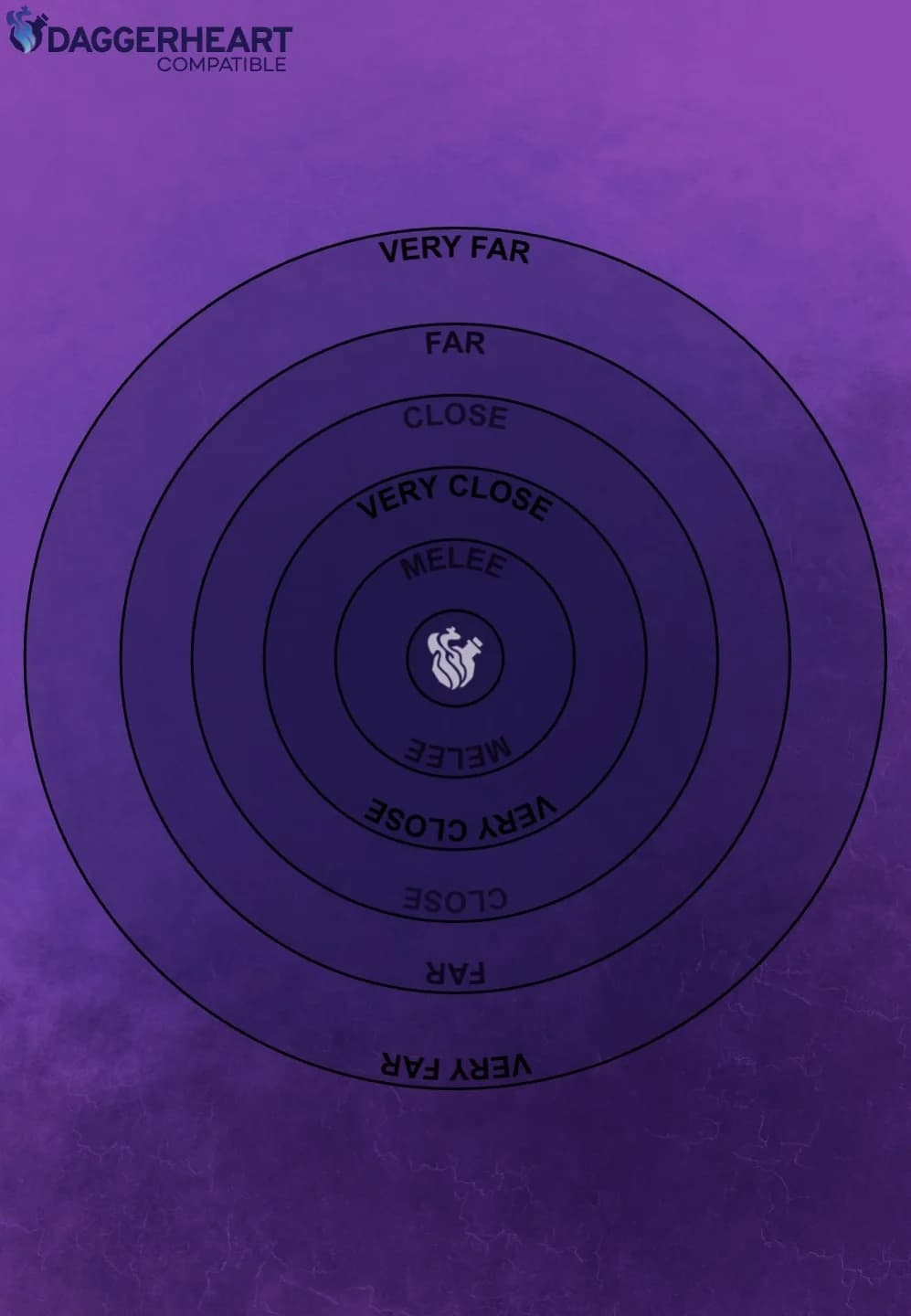
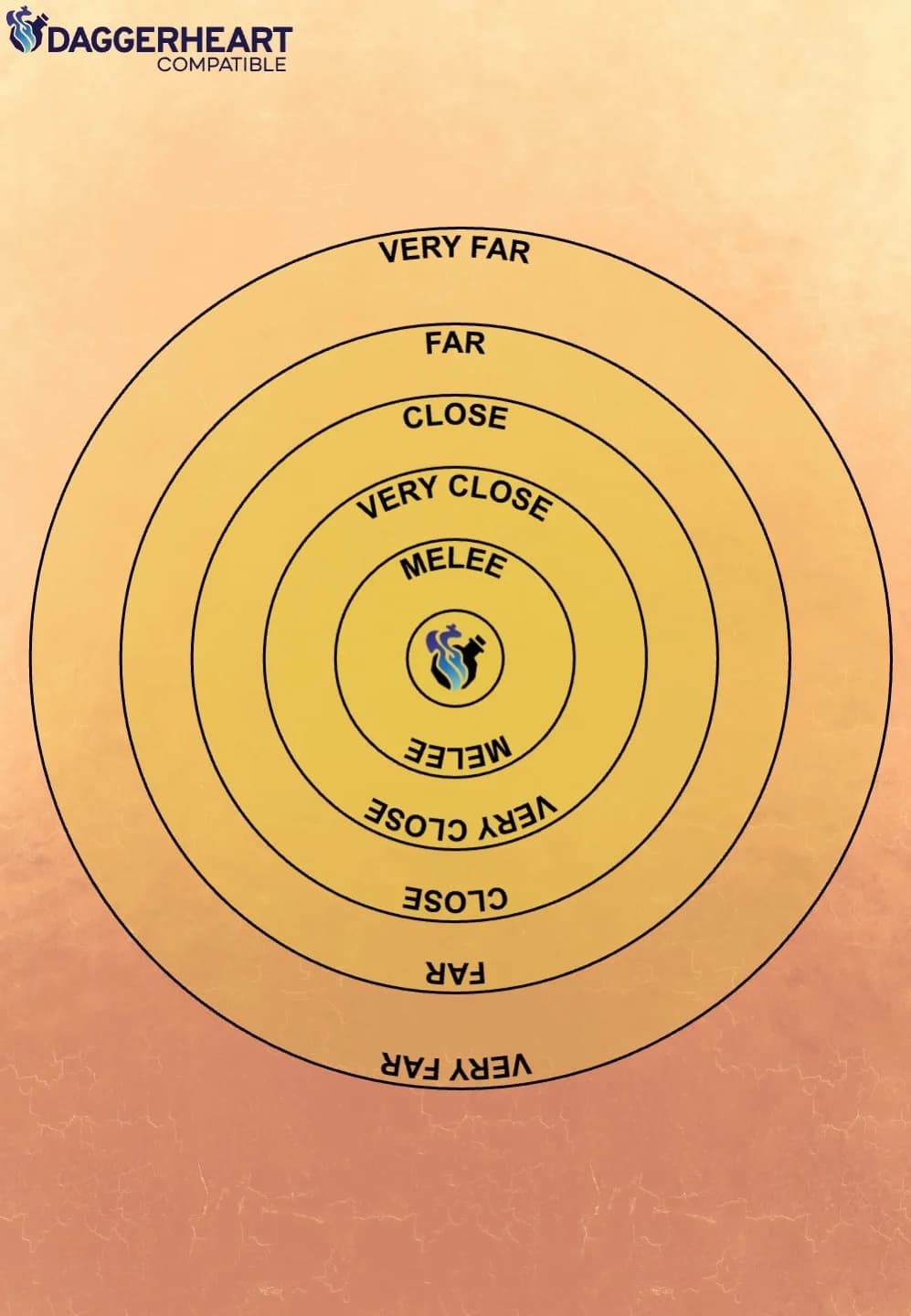
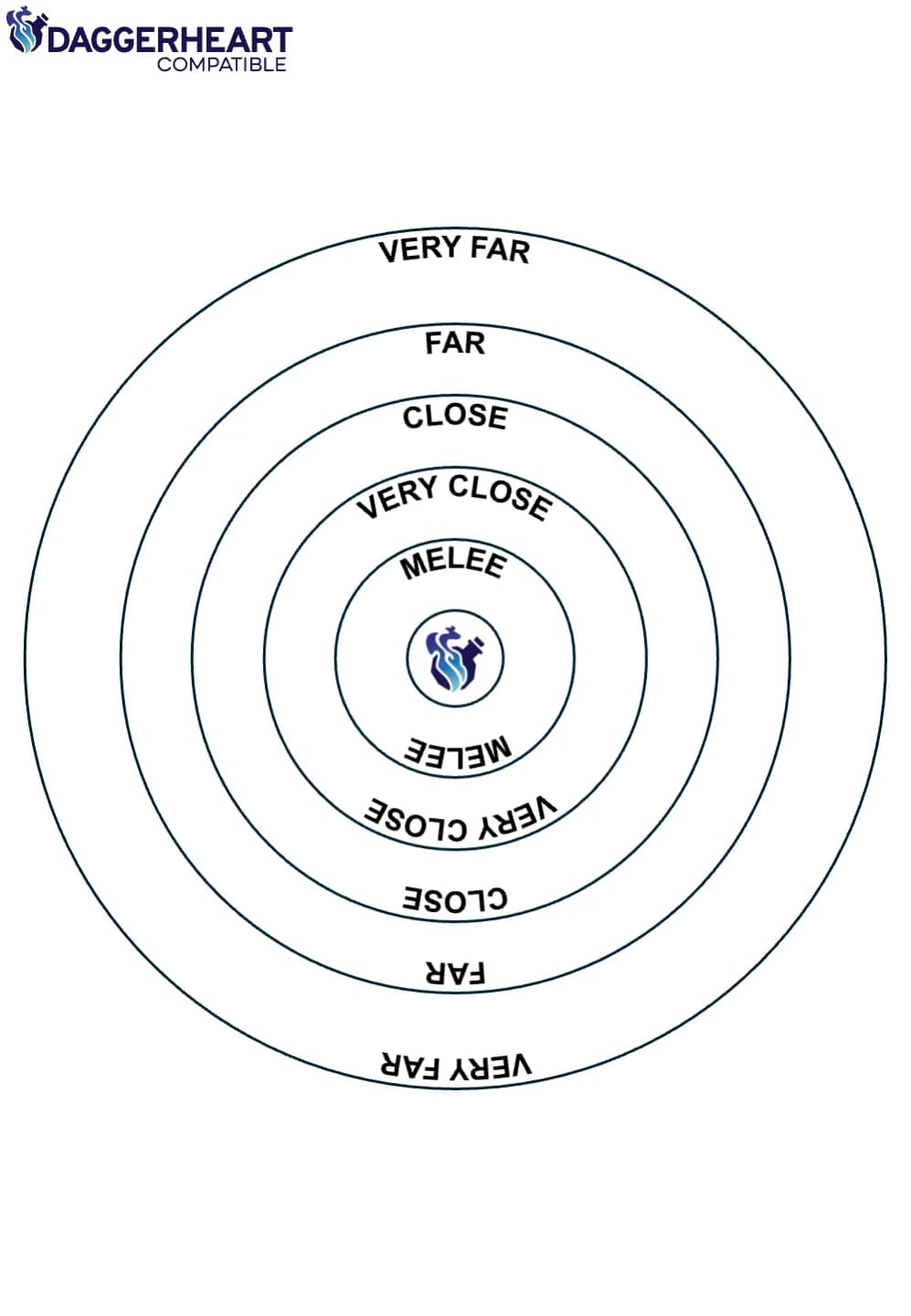
PLAYER-BASED RANGE MAP
BASE GUIDE TO USE THIS TOOL
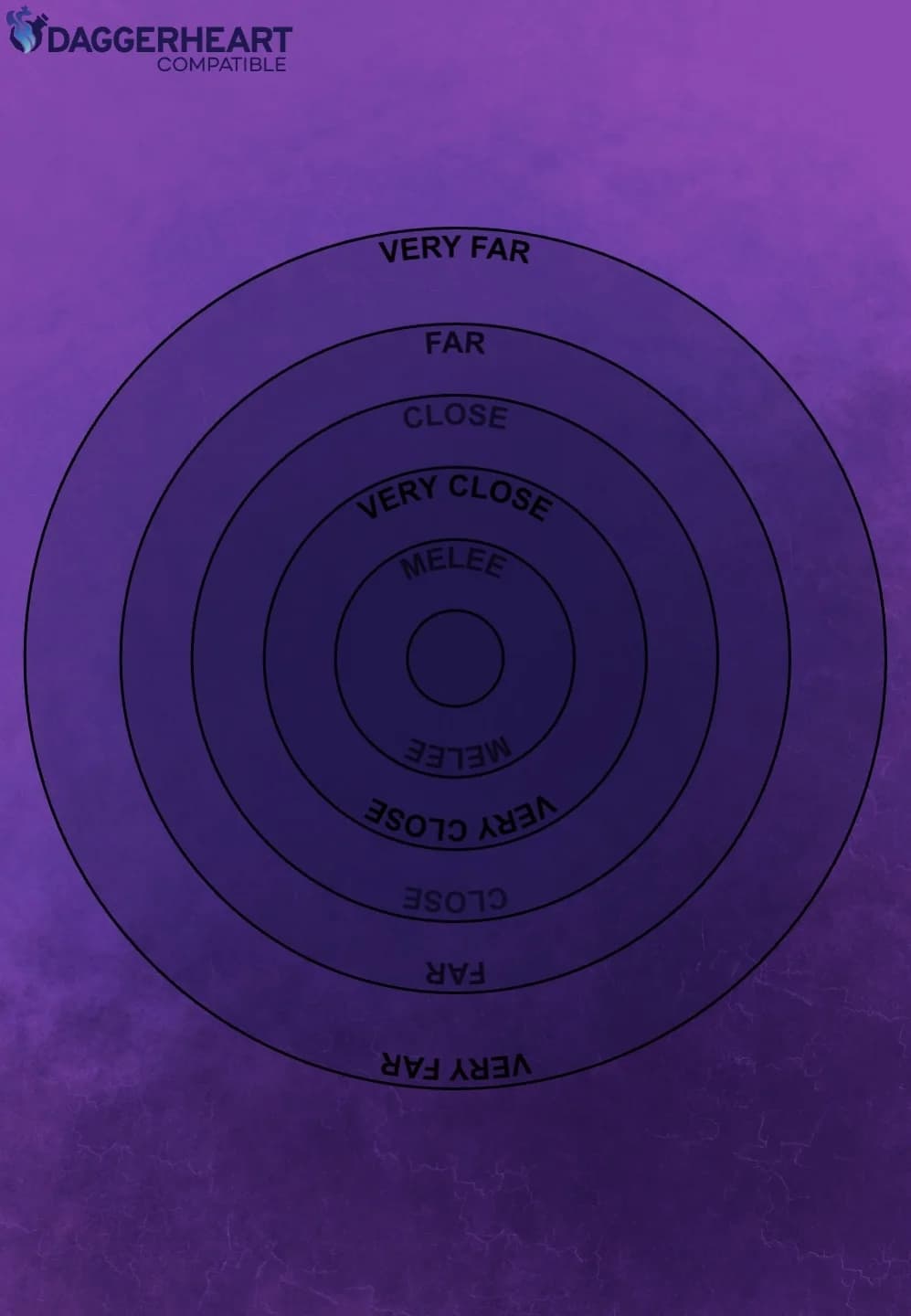
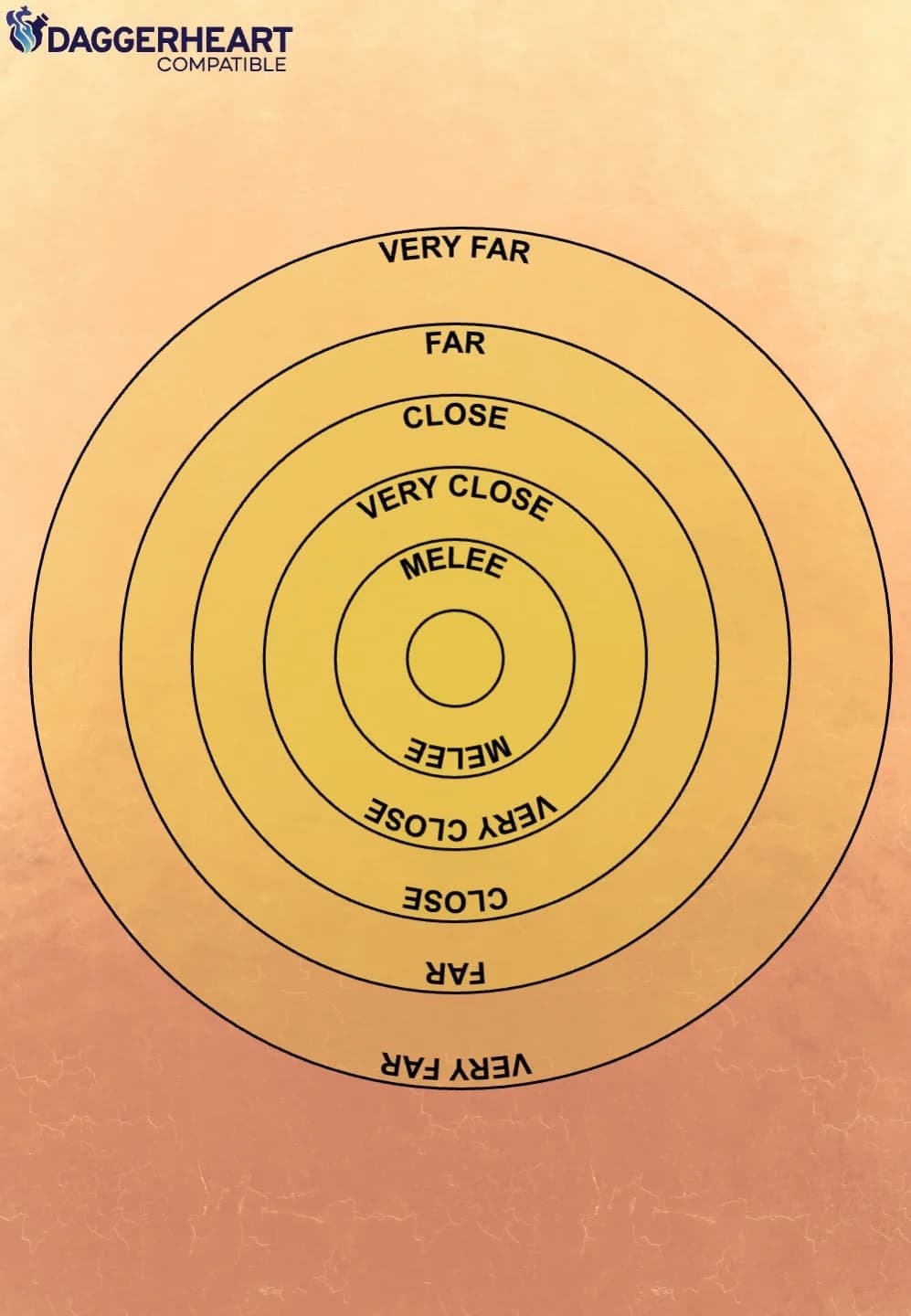
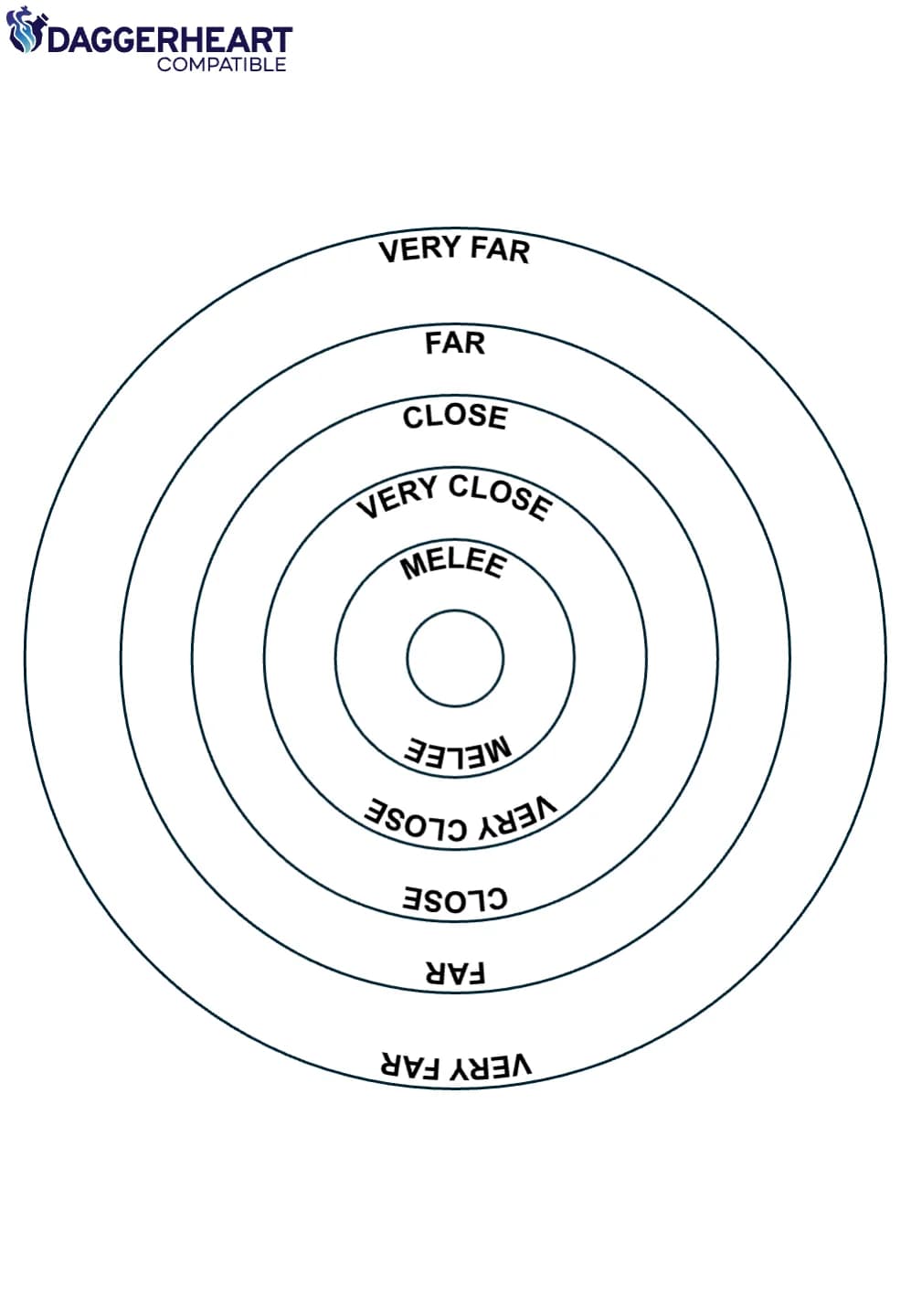
This sheet gives every player the possibility to visualize Daggerheart’s Ranges (Very Close, Close, Near, Far, Very Far) with a circular map. Every token placed on this simplified map represents an enemy or ally similar to the grid map, and how far it is from the character.
Why Use This Tool?
Daggerheart is explicitly a fiction-first game, and I play it using a lot of the theatre of the mind. The ranges, which are the basis of the distance estimation in Daggerheart's design, are intentionally abstract, and they don't fit much the grid-style gameplay. Obviously, a lot of players still struggle to run combats fully in the theatre of the mind, so a simplified map in order to better visualize the enemies could help them.
This type of visualization helps leaving space to the GM and players to improvise and describe the ambient without changing a grid map but still having an anchor on where the enemies and allies are.
Combat With This Tool
In general, at the start of every location, every single player has to place on their personal map a token for each enemy and party member that is in the scene.
During the combat, every time a creature or character that is in the spotlight moves, every player has to move the corresponding token to the correct range accordingly with the fiction.
Limits and Considerations
The biggest limit of this visualization is that it doesn't give as much information as a grid, for example the distance between two different enemies is not given by the singular player map (could be given by the sum of the different players) or the walls of a room. This leaves room to the fiction not to be bounded on a grid, but also can generate some ambiguity on what is going on during the combat.
This problem could easily be fixed with good communication between the GM and players, giving more details when a player asks for them.
OPTIONAL ADD-ONS
Using these additional (slightly more elaborated) rules, you can add more depth to this tool.
Option 1: using d6s as tokens
A simple prop that can substitute easily a generic token is a bunch of d6s. Having two big sets of black and white six-faced dice is (in my opinion) the best way to represent every enemy and ally.
This kind of dice costs really a low price in almost every kind of shop, and two sets can be given to each player in order to visualize the creatures. When the combat starts every player chooses a number and places the white die representing each party character on their map. Then the Game Master assigns a number for every monster (or in case of large amount of monsters of the same type, can assign it to a monster type directly) and each player places one black die for each monster (in this way the GM can call every monster with the number when there are some doubts on which is moving or attacking).
Option 2: Compass-Like map
Another improvement that can be done to the player map is to consider it as a compass. Whenever an enemy or ally is generated the placement in the appropriate zone is not casual. In fact this could represent the cardinal position in which the enemy is placed referring to your character.
In this way, situations like two enemies flanking you, that could result in being a bit tricky to visualize, can be easily distinguished by other conditions.
This is intended to be an approximate way to describe the enemy position, so it isn't necessary to be precise. Also, this kind of view must be used by the player, and is a tool that can or cannot be used independently.